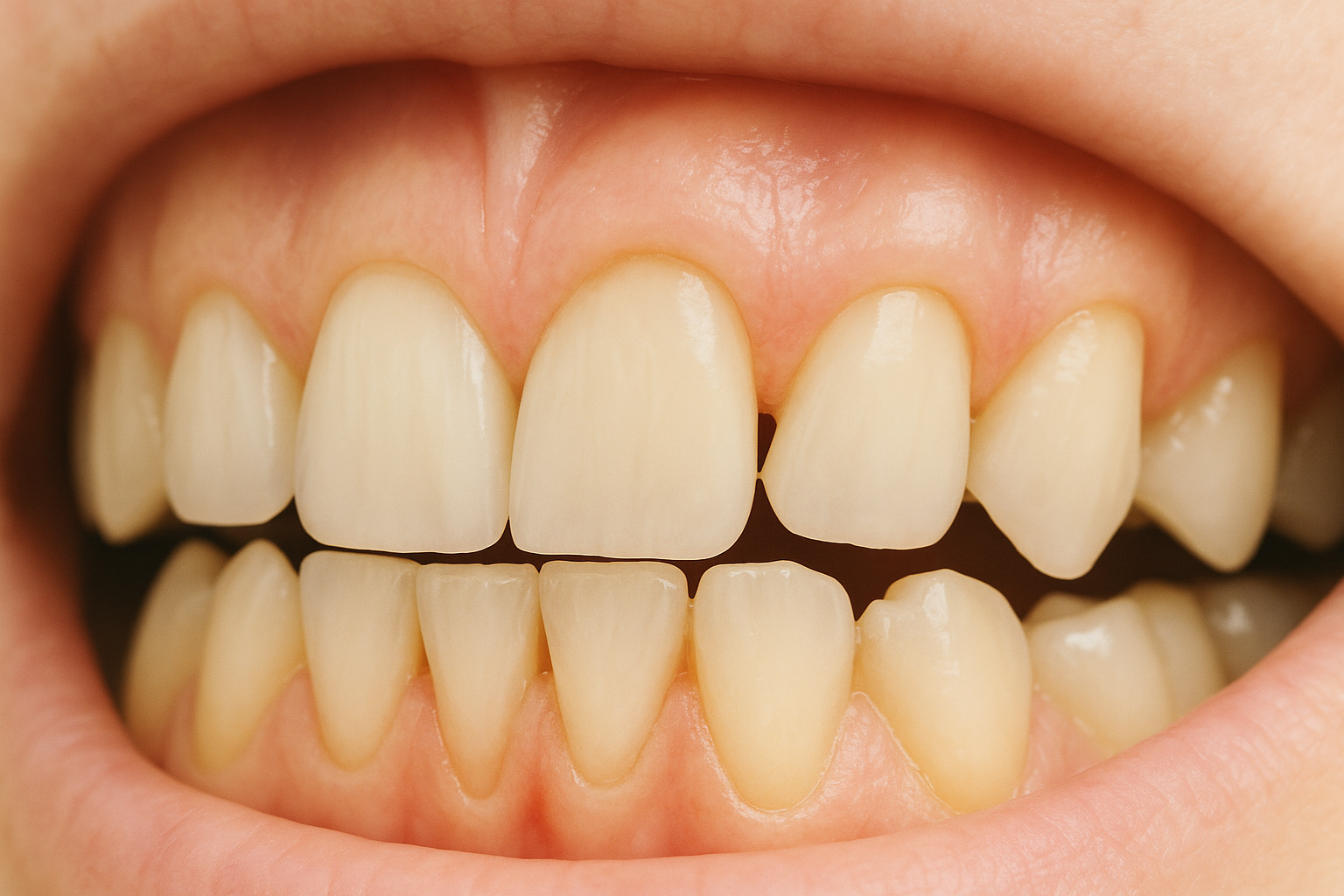
Gum recession can be unsettling. The teeth may look longer, and the gum line can appear uneven. The good news is that a higher gum edge does not automatically mean a tooth is on the way out. Below, I’ll separate what’s mainly a cosmetic change from signs that point to deeper support issues, and I’ll share the day‑to‑day steps that make the biggest difference.
Will a shrinking gum line make teeth loose?
The position of the gum edge and the stability of a tooth are related but not the same. Tooth stability depends most on the bone that surrounds and supports each root. A higher gum line is chiefly about how much root is visible, not necessarily how secure the tooth is.
Peer‑reviewed work on age‑related changes in teeth shows that exposure of root surfaces becomes more common as we get older, even when the teeth are otherwise serviceable because the underlying support remains steady (PMID 28032898). In my practice, I regularly see people with long‑standing, stable recession and firm teeth, provided plaque is well controlled and professional care is kept up. The reverse is also true: some mouths with a low gum edge still have reduced support out of sight—appearance alone cannot judge stability.
What really raises the risk of tooth loss is when there is measurable loss of the bone around a tooth. That needs clinical checks—visual appearance alone can’t tell you how much support remains. Routine exams, including gentle measurements around teeth, are how we catch changes early and keep you on a stable path. [1]
96% of Dental Pro 7 customers reported visible improvement in gum appearance Source: 303 approved product reviews for Dental Pro 7 product line (2023–2025)
What actually causes the gum edge to move back?
There isn’t usually a single cause. For many, it’s a gradual, age‑related change compounded by brushing style over decades. As we age, root exposure is simply more common, even in mouths that are otherwise healthy (PMID 28032898).
Daily plaque at the gum line is another major driver. The architecture of dental plaque is surprisingly complex; it forms organised communities that cling along the edges and between teeth, which are easy to miss without precise technique (PMID 20195365). If residual plaque sits at the margin day after day, the gum edge can creep back over time.
Other contributors include tooth position (especially crowding or teeth that sit outside the arch), naturally thin or delicate gum tissue, strong lip or cheek pulls when you move or speak, clenching and grinding, and oral piercings that rub the gum. Past dental work or minor trauma near the edge can also be part of the picture. A history of very hard scrubbing with stiff bristles is another common factor I see during hygiene coaching.
Finally, saliva quality matters. Dry mouth from certain medications or from mouth‑breathing can make plaque more tenacious and can raise the risk of surface wear on exposed roots. If you’ve noticed a persistently dry mouth, mention it at your next visit so your plan can be tailored.
Is my situation just cosmetic or a sign of deeper support loss?
There are some practical clues to help you decide how quickly to seek advice. A higher gum edge on its own—especially if it has been unchanged for a long time—often points to a cosmetic change. However, new changes in how your teeth feel or move can flag support concerns.
- Cold sensitivity on an exposed root is common with a higher gum line and does not, on its own, prove deeper support loss.
- Looseness, drifting teeth, spaces opening where they were once tight, or a bite that suddenly feels different warrant prompt assessment.
- Only a dental exam—using measurements and, if needed, X‑rays—can confirm the status of the bone around each tooth.
| What you might notice | More likely scenario | Urgency | Next step |
|---|---|---|---|
| Teeth look longer, edges feel the same, no new looseness | Mainly a cosmetic gum line change | Routine | Refine brushing/interdental care; review at your usual dental visit |
| New sensitivity to cold on one or more roots | Exposed root surfaces with intact support | Routine to soon | Use fluoride toothpaste, adjust brushing pressure; book a hygiene review |
| Tooth feels mobile, spaces opening, bite feels different | Possible loss of bone support | Prompt | Dental assessment with measurements; targeted X‑rays if indicated |
| Recurring gum soreness that doesn’t settle with careful cleaning | Persistent plaque retention and potential support changes | Prompt | Professional cleaning and personalised coaching; follow‑up monitoring |
Remember, appearance alone can be misleading. A calm, step‑wise exam is the only way to know what’s going on beneath the surface. If one area seems to change faster than the rest—especially on a lower front tooth or a canine that sits slightly outside the arch—book sooner rather than later so we can fine‑tune your tools and technique.
Can daily care slow the change and protect exposed roots?
Yes—day‑to‑day technique is crucial. Think finesse, not force. Your goal is to disrupt plaque where it forms and to protect the now‑vulnerable root surfaces against decay and wear.
- Brush with a soft manual or powered brush. Hold it with a light grip and angle the bristles gently towards the gum edge so the tips skim the margin. Avoid scrubbing.
- Clean between teeth every day with floss or correctly sized interdental brushes. This is where complex plaque communities often persist if untouched (PMID 20195365).
- Use a fluoride toothpaste to strengthen exposed root surfaces against decay. Spit out the excess and avoid rinsing right away so a thin layer remains.
- After acidic drinks (fizzy drinks, citrus, wine), rinse with water and wait around 30 minutes before brushing. The pause helps you avoid rubbing softened surfaces.
- Mind your pressure. If you notice notches near the gum edge or bristles splaying in a few weeks, that’s a sign to ease off and refresh your technique.
- Consider a powered brush with a pressure sensor if you tend to press hard; many people find the built‑in feedback keeps them consistent.
If you’re curious about toothpaste options for a higher gum line, we’ve covered choices and ingredients here: What Is the Best Toothpaste for Receding Gums? For those with frequent sensitivity, your dental team can also recommend varnishes or in‑office applications to help comfort—these are paired with improved daily technique, not used instead of it.
When should I book a dentist or hygienist for gum recession?
Any rapid change deserves a look. If you notice new looseness, drifting teeth, recurring gum soreness, or persistent mouth odour that doesn’t improve with careful cleaning, get assessed. Exposed roots that are frequently sensitive or that trap plaque also justify a timely visit for coaching and professional cleaning.
Your general health matters too. Conditions that affect saliva, reflux, or frequent snacking can speed up surface wear or plaque build‑up. Very rarely, medical issues in the background can be linked to ongoing gum bleeding; this is uncommon but worth mentioning to your dentist if it applies (PMID 29869386).
When to see a dental professional
If your gum line changes quickly, a tooth feels loose, spaces open up, or your bite feels different, book a dental assessment promptly. Regular check‑ups and hygiene visits are also essential for anyone with a receding gum line, even if things seem stable.
Reliable overviews of gum health and risk factors are available from the NHS and the American Dental Association. Broader oral health data can be found via the CDC. [2]
How do dental professionals check the support around teeth?
Your dentist and hygienist will start with a detailed map of the mouth: where plaque and calculus sit, where the gum edge currently lies, and how the shallow groove around each tooth behaves when gently measured. These combined readings give a picture of current support.
Targeted X‑rays may be taken to visualise bone levels and root anatomy. Not every area needs an image—your clinician will decide based on the exam and your history. They will also look at tooth position, your brushing tools and pressure, signs of grinding or clenching, and any lip or cheek pulls that could be tugging on the gum edge.
The output of that visit should be a tailored plan: technique coaching, selecting the right interdental sizes for each gap, surface polishing where needed, and a follow‑up interval that matches your risk profile. Expect practical, specific advice—for example, exact interdental brush sizes for each zone, or a switch to a smaller brush head to reach lower front teeth without rubbing.
In some cases, you may be referred for a specialist opinion. That adds detail on gum thickness, root coverage possibilities, and how tooth position interacts with your gum line. Even then, the day‑to‑day plan at home remains the foundation.
Can mouthrinses or natural extracts support gum care?
Mechanical plaque control is the foundation, but some people like an add‑on rinse. Evidence shows dental plaque is a structured biofilm, and adjuncts may help disrupt it alongside brushing and interdental cleaning (PMID 20195365). [3]
Some botanical rinses have been studied for specific goals—for example, an Azadirachta indica (neem) mouthwash has been investigated in the context of managing tooth sensitivity on exposed surfaces (PMID 39554682). Systematic reviews also report that essential‑extract mouthrinses can support plaque control in a daily routine; interestingly, formulations with or without alcohol show broadly similar outcomes in pooled data (PMID 39133629). [1]
If you prefer a targeted, minimalist step focused on appearance and freshness, a professional‑strength, lipid‑based gum care concentrate such as Dental Pro 7 can sit neatly within your routine. Used after brushing and interdental cleaning, it supports a freshly polished feel, a more defined, visually elevated gum line, and helps neutralise odour‑causing impurities for long‑lasting fresh breath. It’s a supportive add‑on, not a substitute for mechanical cleaning. For those who like potency, look for mentions of “100% Lipid Potency” and similar cues. [2]
What everyday habits protect a receding gum line long term?
Small, consistent choices add up. Think of your gum line like the frame around a picture—care for the frame and the picture looks better for longer. The aim is to keep plaque thin and easy to remove, reduce mechanical stress at the margin, and protect exposed root surfaces from wear and decay.
- Adopt a light‑pressure brushing style; replace brush heads every three months or sooner if bristles splay.
- Use the smallest interdental brush that fits each space without force; check sizes periodically, as contours can change.
- Limit frequent snacking and acidic sips. Keep most drinks and snacks to mealtimes, and sip water between meals.
- Wear a night guard if your dentist recommends one for clenching or grinding. This can reduce flexing forces at the gum edge.
- Track your technique. A few disclosing tablets each month can reveal where plaque tends to linger so you can adjust your angles.
- Schedule regular dental and hygiene visits for technique coaching and early course‑corrections. Ask for a written home‑care plan with product types, brush sizes, and timing.
With the right daily habits and steady professional support, many people keep a higher gum line stable for years while maintaining firm, comfortable teeth. That stability is the real goal: calm tissues, a fresh feel, and confidence that your routine is working for you rather than against you.
Frequently Asked Questions
Can receding gums grow back naturally?
The gum edge rarely moves back down once it has lifted, but the area can often be kept stable and comfortable. The focus is on precise home care, professional cleaning, and protecting exposed root surfaces so the change does not progress.
Is tooth sensitivity a sign my tooth is at risk of falling out?
Not usually. Cold sensitivity on an exposed root is common when the gum has moved, even with good bone support. New looseness, drifting, or a bite that feels different are the changes that warrant urgent assessment.
What brush and technique are safest if my gums are receding?
Use a soft manual or powered brush. Hold it with a light grip, angle bristles gently towards the gum edge, and let them skim—no scrubbing. Clean between teeth daily with floss or correctly sized interdental brushes.
Do I need a mouthwash if I already floss and brush well?
Mechanical cleaning does the heavy lifting. A mouthrinse can be a helpful add‑on for freshness or to support plaque control, but it’s not a substitute. Choose options that fit your goals and sensitivity needs.
Will orthodontic alignment help if crowding is contributing to recession?
If tooth position is a factor, aligning teeth may make cleaning easier and reduce mechanical stress on the gum edge. Your dentist or orthodontist can advise after assessing gum thickness and bone support.
How often should I see a hygienist if I have recession?
Many people do well with 3–6‑monthly hygiene visits, tailored to your plaque levels, dexterity, and any support changes. Your dental team will set a recall that matches your needs.
| Metric | Finding | Source |
|---|---|---|
| Gum disease prevalence (US adults) | 47.2% | CDC, 2024 |
| Adults with severe periodontitis | 9.0% | CDC, 2024 |
| Link to systemic health | Established association | NEJM, 2017 |
"Tried using Dental Pro 7 after reading and researching all the ingredients. Reason to spend this$ are: 1. All Dental Pro 7 *ingredients are natural food we are currently consuming (clove, peppermint, manuka, etc) and fam…" [3]
— Bella Estonia Tjokro ★★★★★