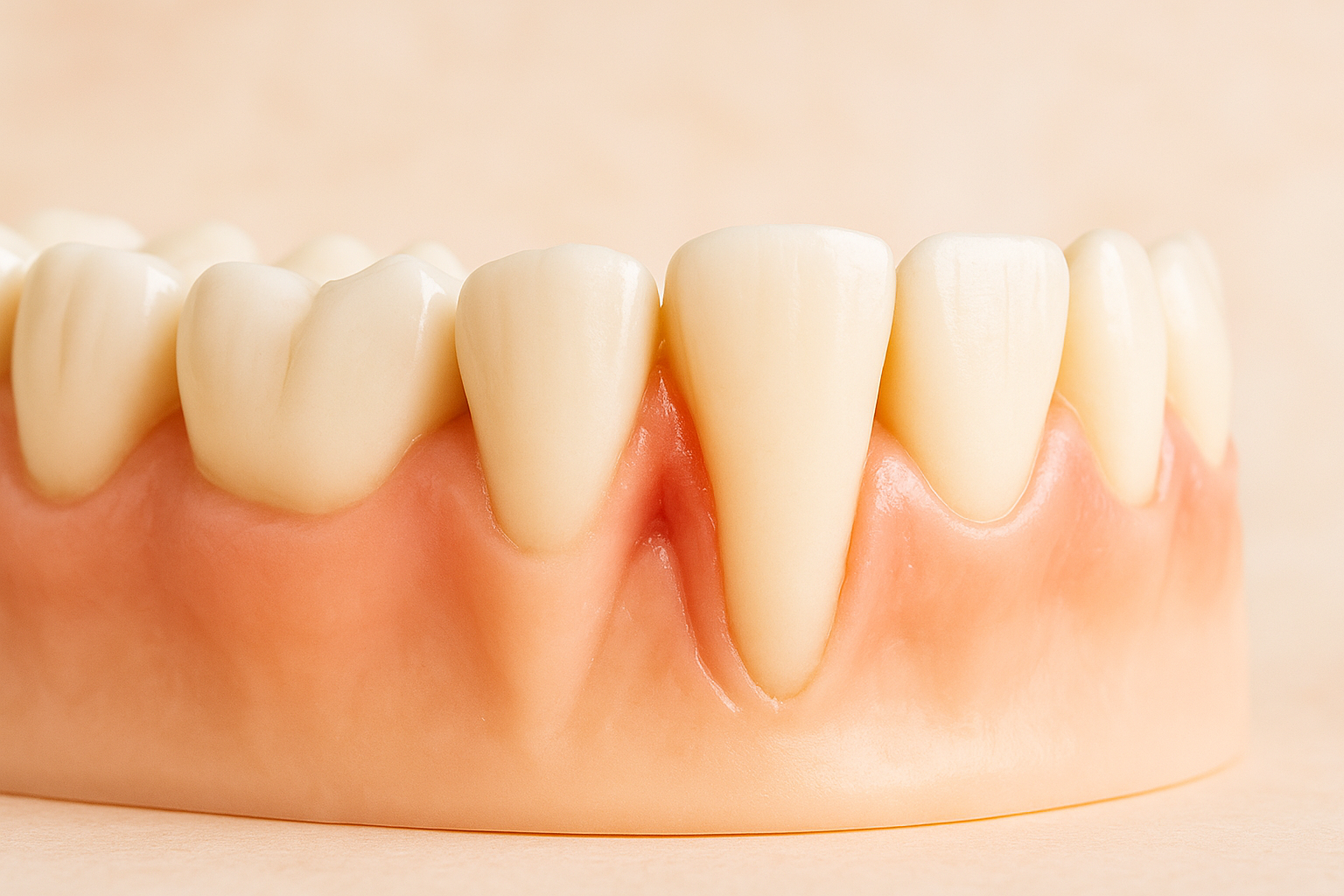
Gum recession is common, but it isn’t inevitable. Some causes are in your control—like brushing force, plaque along the margins, and tobacco—while others relate to your gum type, tooth position, and life‑stage hormones. In this UK‑centred guide, I’ll show you what you can change this week, what calls for a dentist, and what research may reshape care over the next decade. I’ll keep it in plain English, with direct steps you can take right away. [1]
For deeper context on how gum changes tie into general health, you might also like our pieces on gum disease and heart health and whether gum recession means teeth will fall out.
What actually causes receding gums—and which factors can you control?
Most gum lines move for more than one reason. The daily driver is usually plaque left at the gum edge. Bacteria thrive where the brush misses, and the margin gradually pulls back. Add a heavy hand with the brush, and the delicate neck of the tooth can wear, encouraging further pull‑back. Tobacco—smoked or vaped—dries and stresses oral tissues and often hides early warning signs in the mouth, so issues advance unnoticed. Clenching or grinding loads the gum edge and can speed margin movement where tissues are already thin.
Health and life stage matter too. Hormonal changes in puberty, pregnancy, and menopause can make the margin more reactive to plaque. When cleaning slips during these phases, the gum edge may change faster than expected. Medicines that dry the mouth, acid reflux, and some autoimmune conditions can also shift saliva and biofilm balance, making the margin less resilient to everyday stresses. If you notice persistent bleeding or rapid changes, pair a dental review with a GP chat to cover wider health angles.
Genetics sets the stage. Some of us naturally have a thinner gum and bone plate over the front teeth. If a tooth sits slightly outside the jaw line, the gum over it has less support—so even average brushing and normal plaque levels can lead to earlier pull‑back. That doesn’t mean you’re powerless; it means your technique and maintenance schedule matter even more.
Finally, dental work and appliance fit play a part. Overhanging fillings, uneven edges, and ill‑fitting retainers or partial dentures trap plaque along the margin. Once these ‘plaque‑retentive’ spots are smoothed or replaced, the area is far easier to maintain day to day.
96% of Dental Pro 7 customers reported visible improvement in gum appearance Source: 303 approved product reviews for Dental Pro 7 product line (2023–2025)
What early changes should you spot before the gum edge moves?
Early changes are easy to miss because they don’t always hurt. One of the first clues is sensitivity at the neck of a tooth. A sip of cold water, sweet snacks, or a citrus drink might give a quick twinge. If the feeling keeps returning in the same area, take note: this is often the moment to refine your technique before the margin creeps further.
Visually, teeth may start to look longer, and small triangle‑shaped gaps can appear between them. You might see a darker or yellower strip near the gum edge—that’s the root surface showing through. Gum edges may look uneven when you compare left and right sides. Frequent bleeding on brushing is a clear sign to improve cleaning and book a hygiene visit; as far back as 1952, clinicians noted the close link between plaque and bleeding in general practice settings (PMID 13003755).
Texture and breath offer clues as well. If your teeth feel rough or sticky again within hours of brushing, plaque is likely building up along the gum line. That build‑up keeps the margin under constant stress. It’s not just about brushing longer; it’s about brushing smarter—angle, pressure, and sequence.
When to see a dentist or GP
If you notice one‑sided gum changes, sudden sensitivity, persistent bleeding for more than a week despite careful cleaning, a loose tooth, ulcers that don’t settle, or a dramatic shift in breath or mouth dryness, book a dental exam. If your dentist suspects a wider medical link or a medicine effect, they may advise a GP review. Reliable overviews are available from the NHS and the CDC.
How do dentists confirm recession and decide what’s urgent?
Confirmation starts with a close look and precise measurements. Your dentist or hygienist will chart the position of the gum edge against the natural join between enamel and root, then gently measure around each tooth to record how the tissues sit. They’ll note plaque‑retentive spots, any bleeding points, and areas that are hard to reach at home. This creates a map that guides both home care coaching and any in‑clinic work.
Next comes a wear and bite review. If there are notches at the necks of teeth, your clinician will decide whether they’re from strong brushing, acid wear, or bite forces. They’ll check your chewing pattern for signs of clenching and grinding and look for premature contacts that overload specific gum margins. Often, these bite features line up exactly with the teeth that are changing fastest.
Radiographs (x‑rays) help reveal the support around the roots and any hidden tartar. They also show root shape—some roots are naturally more prominent or have grooves that collect plaque. Imaging clarifies whether orthodontic movement, selective smoothing, or protective bonding might help.
Finally, your clinician builds a risk profile: tobacco exposure, saliva flow, medicines, reflux, autoimmune conditions, orthodontic history, family patterns, and your current cleaning routine. From this, you’ll get a practical plan: refine technique, see the hygienist at an interval that matches your risk, and consider protective steps like a night‑time splint if grinding is present.
How do hormones and life stages like pregnancy or menopause affect your gum line?
Hormones change how the margin responds to everyday plaque. During pregnancy, many people notice their gum edges feel more reactive. That doesn’t automatically mean trouble—what it means is that detailed daily cleaning becomes even more important. A soft brush and meticulous interdental routine can keep the margin looking healthy through each trimester. Your dentist may suggest more frequent hygiene visits during pregnancy because professional cleaning is safe and helpful across this period. See the American Dental Association’s overview of gum recession for general guidance complemented by your local NHS pathway. [2]
During menopause, shifts in saliva and soft‑tissue tone can make the mouth feel drier and the margin more delicate. Acidic drinks may sting more, and sensitivity at exposed roots can increase. Focus on gentle technique, hydration, and regular hygiene visits. Alcohol‑free rinses are often better tolerated if dryness is an issue. If you’re using HRT or other hormone therapies, mention this to your dentist so your home routine can be tailored to comfort and appearance goals.
Puberty and cycle phases can bring brief swings in gum feel and appearance. Here, consistency wins: sticking to nightly interdental cleaning and a light‑pressure brushing method minimises these short‑term ups and downs.
In my practice, the biggest gains for patients navigating hormonal phases come from small, reliable habits: brushing before you’re exhausted at night, using a soft brush head that encourages a gentle hand, and keeping an interdental kit where you’ll actually use it—often in the living room before heading to bed.
Can genetics and tooth position predict risk—and how do you manage it?
Genetics can’t be changed, but they can be identified and managed. If you’ve inherited a thin gum and bone biotype—especially over lower front teeth—your margin may be less tolerant of brushing force and plaque build‑up. When a tooth sits slightly outside the bony housing, the overlying gum is naturally slimmer. Add clenching or a strong brushing habit, and the edge can move sooner than expected.
You don’t need a consumer genetic test for this. Dentists can classify your gum type by examination and imaging. If both parents had early gum changes, it’s sensible to start prevention early: schedule hygiene visits before issues appear, keep a very soft brush at home and in your bag, and perfect a feather‑light angle‑based technique. An oscillating‑rotating electric brush with a pressure sensor is useful for many people with a thin gum type.
Risk‑managed habits make a big difference: ultra‑soft brushes, a pen‑grip, a low‑abrasive fluoride paste, nightly interdental cleaning, and a focus on the tiny triangle spaces between teeth. If you grind, a protective night‑time splint can spread forces and reduce stress on the most delicate margins. If a particular tooth is prominent, orthodontic movement may be the long‑term stabiliser—more on that below.
Which daily habits, diet tweaks, and adjuncts genuinely help?
Your home routine is the lever you control every day. The goal is simple: keep the margin clean without scrubbing it. Here’s what that looks like in real life.
- Brushing: Use a soft or ultra‑soft brush. Hold it like a pen, angle bristles at 45° to the gum edge, and make short, light strokes. If you prefer power brushing, choose an oscillating‑rotating model with a pressure sensor. Two minutes, twice daily, is a good baseline. Technique beats effort—let the bristles do the work.
- Interdental care: Clean between teeth every night. Floss is great for tight contacts; interdental brushes reach triangular spaces. Use the smallest brush that fits each gap without force. Many early changes begin in these embrasures.
- Quit tobacco: Stopping smoking or vaping supports healthier‑looking tissues and a fresher mouthfeel. Your local NHS stop‑smoking service has proven programmes and free support.
- Diet: Keep acidic sips (fizzy drinks, citrus water, vinegary tonics) to mealtimes and rinse with water after. Limit between‑meal sugar to protect root surfaces. Favour calcium and vitamin D sources, leafy greens, and lean proteins for general oral health.
- Mouthrinses: Some botanical‑extract formulations have evidence for plaque and gingivitis control when used alongside brushing; a 2025 systematic review supports benefits versus controls (PMID 39133629). If you experience dryness, choose alcohol‑free.
- Supportive concentrates: Many readers like adding a professional‑strength, lipid‑based gum care concentrate such as Dental Pro 7 to their routine. Used after brushing, it can leave teeth feeling freshly polished, help neutralise odour‑causing impurities, and support a healthier‑looking, more defined gum line. It’s a helpful adjunct—not a cure or a substitute for dental care.
Build a week‑one action plan
- Day 1: Book a hygiene visit and ask for a technique refresher focused on pressure and angle.
- Day 2: Swap to a soft brush and start the pen‑grip. Add a sensitivity toothpaste if cold zings bother you.
- Day 3: Add nightly interdental cleaning. Start with the upper teeth—tomorrow do the lowers—so the habit sticks.
- Day 4: Move acidic drinks to mealtimes only. Keep water nearby for sips between meals.
- Day 5: If you wake with jaw tightness, note it and mention it at your appointment—grinding could be involved.
- Day 6: Try a proven adjunct rinse if you like that extra clean feel; pick alcohol‑free if you’re prone to dryness.
- Day 7: Review progress. Are any spots still bleeding on brushing? Spend 20–30 seconds extra on those sites with a gentle technique.
Remember, small improvements compound. In my experience, the combination of a softer brush, a lighter hand, and nightly interdental work does more for most people’s gum lines than any gadget or quick fix.
What in‑clinic options exist, and how do you decide between them?
Once the basics are in place, your dentist will separate what you can control from what they should address for you. Tartar below the margin, overhanging fillings that trap plaque, prominent roots, and grinding all act like anchors on your progress. Removing or modifying those anchors lets your daily efforts shine.
Clinical care complements what you do at home. Here are the main options your dentist or periodontist may discuss, in plain English. [3]
- Professional cleaning (scaling and root planing): Removes plaque and tartar below the margin so tissues can sit more snugly against the tooth. This makes daily cleaning more effective and often improves comfort.
- Desensitising strategies: In‑clinic varnishes and at‑home pastes can cut those sharp zingers from exposed roots, making it easier to brush properly.
- Bonding at the neck of the tooth: Covers notches, improves comfort, and makes the area easier to keep clean.
- Orthodontic repositioning: Moves prominent teeth back within the bony housing when position contributes to change.
- Grafting and related procedures: For single teeth with a thin gum type, connective tissue grafts add thickness and can cover exposed areas. Coronally advanced flaps and tunnel techniques are alternatives in selected cases. Your periodontist will match the approach to your gum type, tooth position, and goals.
- Bite management: Adjusting high spots and providing a night‑time splint reduce margin stress from clenching or grinding.
In my experience, the most successful plans combine a home routine reset with targeted clinical steps: remove tartar, fix plaque traps, protect sensitive necks, and stabilise forces. Only then do grafts or orthodontics deliver their best long‑term result. [1]
What does current research say—and how should you use it wisely?
Several research threads are worth watching—useful context as you build your plan, but not a substitute for basics like gentle brushing and interdental care. [2]
Biofilm‑selective rinses: Early studies are exploring plant‑based blends that may discourage harmful biofilm shifts while sparing more beneficial species. A 2025 proof‑of‑concept showed selective effects in lab‑grown, multispecies biofilms (PMID 40458201). Promising—yet still early. No rinse replaces mechanical cleaning. [3]
Botanical‑extract mouthwashes: A 2025 systematic review and meta‑analysis reported benefits for plaque and gingivitis control compared with controls (PMID 39133629). A proof‑of‑principle study suggests microbiome shifts vary by formula (PMID 41498506), reminding us that not all adjuncts behave identically.
Novel materials: Laboratory work on enzyme‑mimicking nanogels aims to influence the oral environment in advanced gum care models (PMID 40407260). These are not yet everyday clinical tools for recession, but they illustrate where science is heading.
Systemic links: Sometimes mouth findings point to wider health. A 2018 clinical report linked clearing Helicobacter pylori (a gastric microbe) with the resolution of persistent gum bleeding in a difficult case (PMID 29869386). This doesn’t mean stomach bugs ‘cause’ shrinking margins, but it underlines the value of joined‑up dental and medical care when oral changes don’t settle as expected.
What else do people ask about receding gums?
Can receding gums grow back naturally?
Gum margins that have moved away from a tooth typically do not return on their own. You can, however, slow or halt further pull‑back by improving plaque control, using a softer brush with a light grip, cleaning between teeth daily, reducing acidic drinks, quitting tobacco, and managing grinding. In select cases, a periodontist can reposition or add tissue to cover exposed areas for a fuller appearance.
Is swishing plant lipids helpful for receding gums?
There’s no solid clinical evidence that swishing plant lipids restores a receded margin. If you like the clean feel, it may be a neutral extra step, but it should never replace brushing with fluoride paste and proper interdental cleaning. For proven adjuncts, some botanical‑extract mouthrinses show plaque/gingivitis benefits alongside brushing; see the 2025 review (PMID 39133629).
Which toothbrush and toothpaste are best for sensitive, receding areas?
Pick a soft or ultra‑soft manual or an oscillating‑rotating power brush with a pressure sensor. Use a low‑abrasive, fluoride‑containing paste; for sensitivity, a desensitising paste with potassium or arginine can help. The key is technique: a 45° angle to the margin with feather‑light strokes. Ask your hygienist to demo a pressure‑controlled method.
How long does a gum graft last, and will it match my other gum tissue?
Well‑planned grafts can remain stable for many years if you keep plaque low, manage grinding, and avoid aggressive brushing. Colour and contour usually blend, especially with connective tissue grafts, but perfection isn’t guaranteed. Your periodontist will discuss likely coverage and aesthetics for your specific site and gum type.
Do Invisalign or braces make gum recession better or worse?
Tooth movement can help when recession relates to teeth sitting too far outside the jaw line; bringing them back within the bony envelope may stabilise the margin. That said, orthodontics requires meticulous hygiene. Your orthodontist and periodontist should co‑plan if recession already exists or your gums are thin.
Why do my gums recede on just one tooth?
Local factors are common: a rotated or prominent tooth, a frenum pull (the small fold of tissue), a brushing habit focused on one spot, a chip in a filling catching plaque, or a bite overload on that tooth. A dentist can map the cause and suggest targeted steps—from smoothing a trap to adjusting your brushing angle.
If you’ve made it this far, you’re already ahead. Recession is rarely about a single culprit, and it’s never about shame. It’s about finding the few changes that matter most for you, and sticking with them. Do that, and your gum line can look better, feel better, and stay stable for years.
| Metric | Finding | Source |
|---|---|---|
| Gum disease prevalence (US adults) | 47.2% | CDC, 2024 |
| Adults with severe periodontitis | 9.0% | CDC, 2024 |
| Link to systemic health | Established association | NEJM, 2017 |